99 Resumes
Ten months. Roughly a hundred applications. Fifty-three declined, forty-four never replied, and ten I walked away from. This is what looking for work at forty-seven looked like.
99 Resumes
Ten months. Roughly a hundred applications. Fifty-three declined, forty-four never replied, and ten I walked away from. This is what looking for work at forty-seven looked like.
99 Resumes
Ten months. Roughly a hundred applications. Fifty-three declined, forty-four never replied, and ten I walked away from. This is what looking for work at forty-seven looked like.
A friend told me, “Have you thought about design engineer roles instead?”
A month later, I had a job.
I had spent ten months sending resumes. Personalized cover letters, mostly two a day, sometimes three. A spreadsheet that grew faster than the replies did. The wrong resumes, it turned out, went to the wrong jobs and wrong companies. One sentence from a friend, and the search ended.
The question I have been turning over since: why did it take me ten months and a friend's question to see the obvious?
What I was running from
In November 2023, I left Universal Entities.
Three (and then five) of us made games together. Ant in the UK, me in the Czech Republic, Alex in California. Eight time zones between the boss and the rest of us. We had shipped one game on Steam and itch.io – Laserboy – and it proved we could ship.
Then we spent a year starting more than ten prototypes that we never finished. 2D, 3D, platformers, strategy games. Each one was canceled before it became a game. Very often, when I woke up, I found that the game I thought I was working on had been canceled.
The last one was called Tower of Golf. Alex came up with it on vacation, after his phone died while he was playing a game of golf on a flight. Vertical golf, simple fun, low battery use. That was the brief. We worked on it for a year or even more, hard to remember now. We almost shipped three times. Two weeks before meetings at Apple Arcade and Netflix, Alex decided the game was not fun enough yet. I left.
Games are fucking hard to make a living from. And they are hard to make, too.
What I thought I was running to
I thought the door back to product design was open. I had been the design lead for Visual Studio for Mac at Microsoft. Before that, I was at Xamarin from early on. The CV was not a problem, or so I assumed.
But the door was bricked over.
That realization is the one that cost me ten months.
The grind
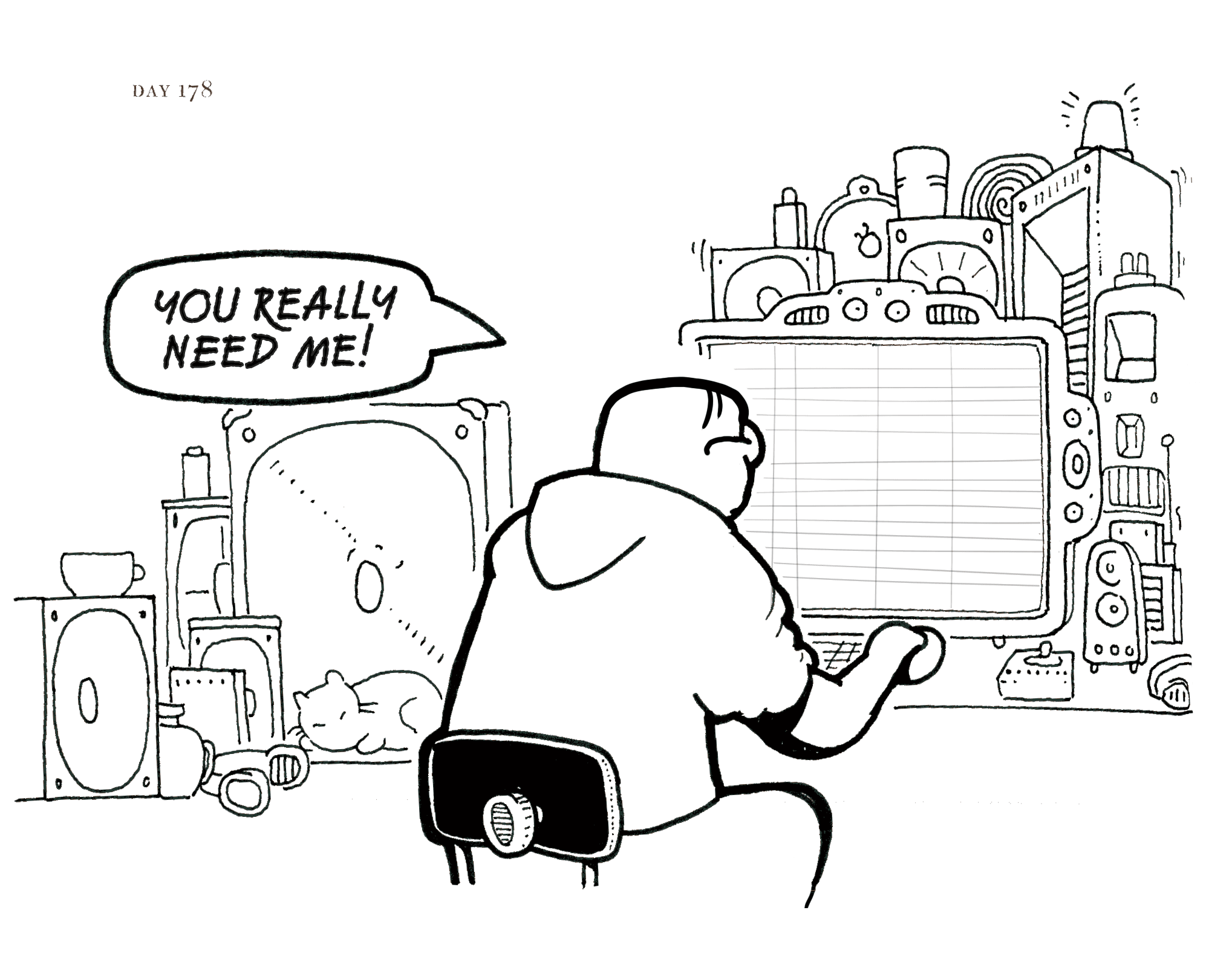
The routine was the same every day. Visit all the job sites. Read job listings. Pick two. Learn about the company and its products. Figure out why you could be useful to them. Write a cover letter that makes it seem like this one is different from the one before. Send it. Update the spreadsheet. Wait. Repeat tomorrow, weekends included.
A friend told me, “Have you thought about design engineer roles instead?”
A month later, I had a job.
I had spent ten months sending resumes. Personalized cover letters, mostly two a day, sometimes three. A spreadsheet that grew faster than the replies did. The wrong resumes, it turned out, went to the wrong jobs and wrong companies. One sentence from a friend, and the search ended.
The question I have been turning over since: why did it take me ten months and a friend's question to see the obvious?
What I was running from
In November 2023, I left Universal Entities.
Three (and then five) of us made games together. Ant in the UK, me in the Czech Republic, Alex in California. Eight time zones between the boss and the rest of us. We had shipped one game on Steam and itch.io – Laserboy – and it proved we could ship.
Then we spent a year starting more than ten prototypes that we never finished. 2D, 3D, platformers, strategy games. Each one was canceled before it became a game. Very often, when I woke up, I found that the game I thought I was working on had been canceled.
The last one was called Tower of Golf. Alex came up with it on vacation, after his phone died while he was playing a game of golf on a flight. Vertical golf, simple fun, low battery use. That was the brief. We worked on it for a year or even more, hard to remember now. We almost shipped three times. Two weeks before meetings at Apple Arcade and Netflix, Alex decided the game was not fun enough yet. I left.
Games are fucking hard to make a living from. And they are hard to make, too.
What I thought I was running to
I thought the door back to product design was open. I had been the design lead for Visual Studio for Mac at Microsoft. Before that, I was at Xamarin from early on. The CV was not a problem, or so I assumed.
But the door was bricked over.
That realization is the one that cost me ten months.
The grind
The routine was the same every day. Visit all the job sites. Read job listings. Pick two. Learn about the company and its products. Figure out why you could be useful to them. Write a cover letter that makes it seem like this one is different from the one before. Send it. Update the spreadsheet. Wait. Repeat tomorrow, weekends included.
A friend told me, “Have you thought about design engineer roles instead?”
A month later, I had a job.
I had spent ten months sending resumes. Personalized cover letters, mostly two a day, sometimes three. A spreadsheet that grew faster than the replies did. The wrong resumes, it turned out, went to the wrong jobs and wrong companies. One sentence from a friend, and the search ended.
The question I have been turning over since: why did it take me ten months and a friend's question to see the obvious?
What I was running from
In November 2023, I left Universal Entities.
Three (and then five) of us made games together. Ant in the UK, me in the Czech Republic, Alex in California. Eight time zones between the boss and the rest of us. We had shipped one game on Steam and itch.io – Laserboy – and it proved we could ship.
Then we spent a year starting more than ten prototypes that we never finished. 2D, 3D, platformers, strategy games. Each one was canceled before it became a game. Very often, when I woke up, I found that the game I thought I was working on had been canceled.
The last one was called Tower of Golf. Alex came up with it on vacation, after his phone died while he was playing a game of golf on a flight. Vertical golf, simple fun, low battery use. That was the brief. We worked on it for a year or even more, hard to remember now. We almost shipped three times. Two weeks before meetings at Apple Arcade and Netflix, Alex decided the game was not fun enough yet. I left.
Games are fucking hard to make a living from. And they are hard to make, too.
What I thought I was running to
I thought the door back to product design was open. I had been the design lead for Visual Studio for Mac at Microsoft. Before that, I was at Xamarin from early on. The CV was not a problem, or so I assumed.
But the door was bricked over.
That realization is the one that cost me ten months.
The grind
The routine was the same every day. Visit all the job sites. Read job listings. Pick two. Learn about the company and its products. Figure out why you could be useful to them. Write a cover letter that makes it seem like this one is different from the one before. Send it. Update the spreadsheet. Wait. Repeat tomorrow, weekends included.
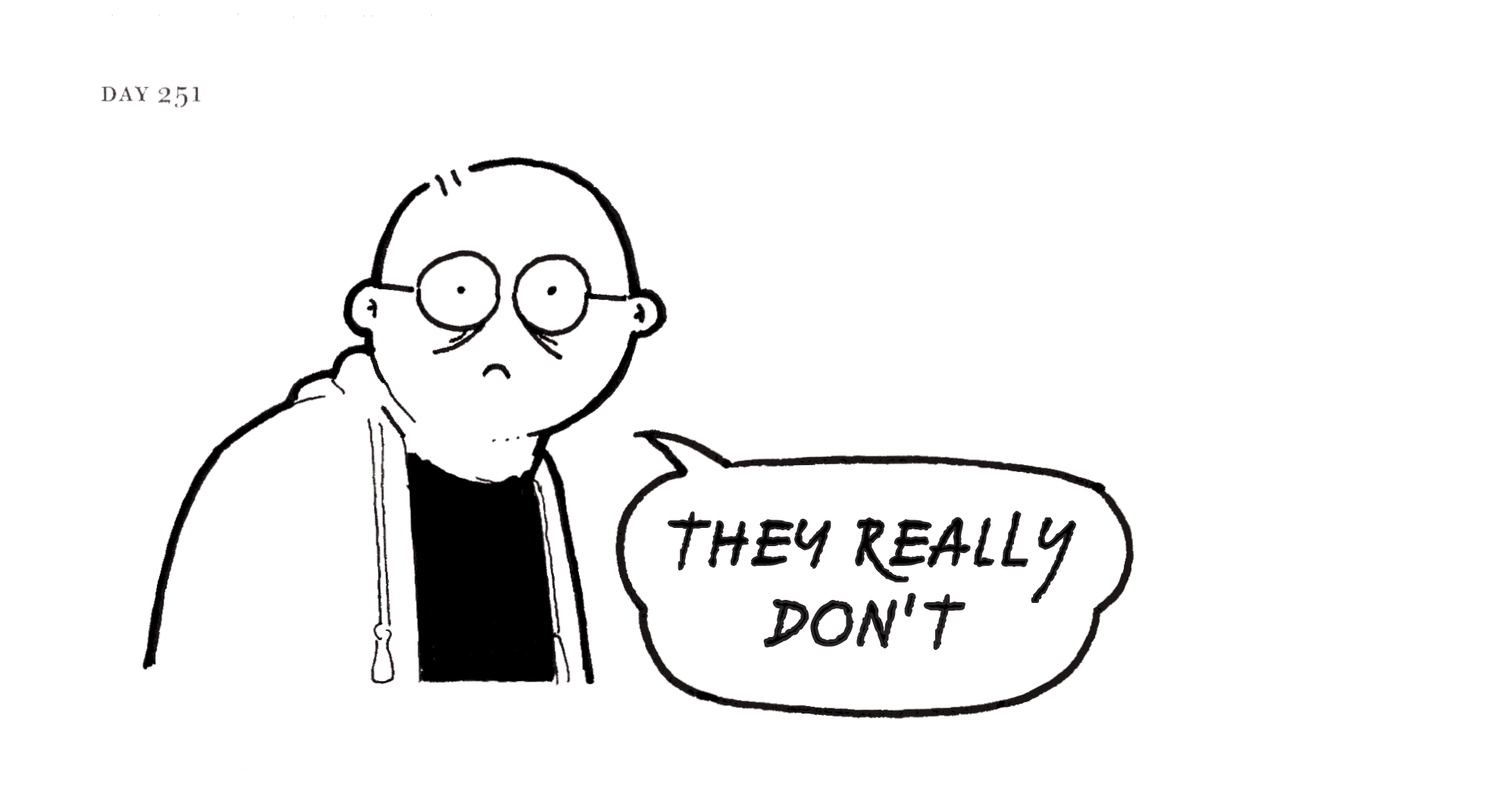
In the mornings, I performed with enthusiasm: See, I am good. You need me. I had to hold it for an hour, long enough to write a cover letter that sounded like I meant it.
In the evenings, I told myself the opposite. That I was not as good as I thought. That the reality wanted to punch me for being proud. After a day of selling myself, this was the inner voice I fell asleep with. This really fucked up my mind, seriously.
I had left Universal Entities because I was burning out. I burned out a second time, not from work, but from trying to get hired to have one.
After enough months of this, you start losing your mind. It’s true what they say. I was there. Not fun.
The shapes of no
The rejections came in patterns. Eventually, you learn to recognize the type before you read the whole email.
The silence. Most of them. You apply. An automated email arrives, telling how lucky the company is that you applied. They confirm they have your email. Then nothing. Three times, when I followed up a week later, a hiring manager replied with a version of “OMG, I wrote you the declination email and forgot to click the send button, sorry bye.” Three different companies. Three different people. Same exact non-event. Like, seriously, what the fuck.
The honest-but-cruel. “You are too old.” “We are worried you would not adapt.” “You would be bored here.” “You would not fit the team.” I never knew what “not fit the team” was supposed to mean. I still don’t.
The structural. “You are a principal, and we only have a budget for a senior.” “We want someone junior we can shape.” This one comes up enough that it deserves a theory. Companies say there is a shortage of senior talent. The same companies filter out senior people at the budget stage and at the “we want to shape them” stage. Both can’t be true. One of them is.
The performative. Some listings stay open for months with no movement. The same listings come back with new dates. I cannot prove anything about any specific job. But I can describe the pattern, and you can too.
Canonical asked me about my high school maths grades. From thirty years ago. There are stories about their CEO and the questions he asks people on calls. I read what they wanted me to write about myself and walked away.
Cursor was the inverse problem. May 2024, founding design engineer role at a company that was rocket-shipping. The homework was a token parser in an hour. I failed. They were not wrong to ask. I was not yet someone who could answer.
And then there was the AI moment.
It was early 2024. The hiring manager was the last call before an offer was made. He never looked at the camera. He asked me, “If I gave you a design brief, would you just do it?” I said it depends on the brief. The research would have to support it. The user testing would have to confirm it.
He said that in that case, they would not hire me. He would just ask the AI.
At the time, I thought he was being arrogant or just stupid. It took me longer than it should have to understand he was telling me something true about where the industry was going. The ground under “product designer” was already moving. I was applying for a job while it was being rewritten, waiting for replies.
The two I got wrong
Two stories sit apart from the rest. They are not about the industry. They are about me.
Deepnote offered me the job in the first week of my search. They wanted someone to design notebook AI interfaces. I said no, I thought designing AI was not for me. I was wrong, wrong, wrong.
It is the cleanest mistake of the ten months. The first company to want me was the company building the thing that the rest of the industry was about to be reshaped by, and I declined because I had not yet noticed the shape.
Microsoft is the other one. I had been there for years. I knew people. I reached out to people I knew. They were friendly. Then they stopped replying. When I asked in person what happened, more than one of them told me they thought someone else had replied to me. Nobody had.
At this point, I feel like there is a hiring table somewhere inside Microsoft, and next to my name, it says don’t reply to him.
Being ghosted by your own former network is a specific kind of injury. The people are still your friends. The institution has forgotten you. You learn that those were two different relationships all along.
The sentence that fixed it
After ten months, a friend looked at my CV and saw what I could not see from inside it. I was not a product designer trying to come back. I was a design engineer who had not been called that yet.
The skillset that made me hard to place – design plus engineering, with twenty or so years of it – was the same skillset that fit cleanly under a new title that did not exist when I started my career. Misrecognition, both ways. The companies could not sort me because my label was the wrong one. I could not find a job because I was applying under the same wrong label.
About “overqualified”: I think there are at least three things hiding inside that word. The budget mismatch is real – companies post senior roles, get principal applicants, and nobody can move. The control problem is real – companies want juniors they can shape, because shaping a principal means listening. And the third one, the one I think about most: companies are afraid that someone overqualified will tell them something sucks. I certainly would, that’s for sure, if I saw it.
None of these is a complete answer. All three are true some of the time.
One month after the friend’s message, I started at a new job.
I am writing this from inside a stable job, at almost forty-eight, knowing that the next time the floor goes out, the labels will have moved again. I would like to know my own name before someone else has to tell me. Thank you, friend.
In the mornings, I performed with enthusiasm: See, I am good. You need me. I had to hold it for an hour, long enough to write a cover letter that sounded like I meant it.
In the evenings, I told myself the opposite. That I was not as good as I thought. That the reality wanted to punch me for being proud. After a day of selling myself, this was the inner voice I fell asleep with. This really fucked up my mind, seriously.
I had left Universal Entities because I was burning out. I burned out a second time, not from work, but from trying to get hired to have one.
After enough months of this, you start losing your mind. It’s true what they say. I was there. Not fun.
The shapes of no
The rejections came in patterns. Eventually, you learn to recognize the type before you read the whole email.
The silence. Most of them. You apply. An automated email arrives, telling how lucky the company is that you applied. They confirm they have your email. Then nothing. Three times, when I followed up a week later, a hiring manager replied with a version of “OMG, I wrote you the declination email and forgot to click the send button, sorry bye.” Three different companies. Three different people. Same exact non-event. Like, seriously, what the fuck.
The honest-but-cruel. “You are too old.” “We are worried you would not adapt.” “You would be bored here.” “You would not fit the team.” I never knew what “not fit the team” was supposed to mean. I still don’t.
The structural. “You are a principal, and we only have a budget for a senior.” “We want someone junior we can shape.” This one comes up enough that it deserves a theory. Companies say there is a shortage of senior talent. The same companies filter out senior people at the budget stage and at the “we want to shape them” stage. Both can’t be true. One of them is.
The performative. Some listings stay open for months with no movement. The same listings come back with new dates. I cannot prove anything about any specific job. But I can describe the pattern, and you can too.
Canonical asked me about my high school maths grades. From thirty years ago. There are stories about their CEO and the questions he asks people on calls. I read what they wanted me to write about myself and walked away.
Cursor was the inverse problem. May 2024, founding design engineer role at a company that was rocket-shipping. The homework was a token parser in an hour. I failed. They were not wrong to ask. I was not yet someone who could answer.
And then there was the AI moment.
It was early 2024. The hiring manager was the last call before an offer was made. He never looked at the camera. He asked me, “If I gave you a design brief, would you just do it?” I said it depends on the brief. The research would have to support it. The user testing would have to confirm it.
He said that in that case, they would not hire me. He would just ask the AI.
At the time, I thought he was being arrogant or just stupid. It took me longer than it should have to understand he was telling me something true about where the industry was going. The ground under “product designer” was already moving. I was applying for a job while it was being rewritten, waiting for replies.
The two I got wrong
Two stories sit apart from the rest. They are not about the industry. They are about me.
Deepnote offered me the job in the first week of my search. They wanted someone to design notebook AI interfaces. I said no, I thought designing AI was not for me. I was wrong, wrong, wrong.
It is the cleanest mistake of the ten months. The first company to want me was the company building the thing that the rest of the industry was about to be reshaped by, and I declined because I had not yet noticed the shape.
Microsoft is the other one. I had been there for years. I knew people. I reached out to people I knew. They were friendly. Then they stopped replying. When I asked in person what happened, more than one of them told me they thought someone else had replied to me. Nobody had.
At this point, I feel like there is a hiring table somewhere inside Microsoft, and next to my name, it says don’t reply to him.
Being ghosted by your own former network is a specific kind of injury. The people are still your friends. The institution has forgotten you. You learn that those were two different relationships all along.
The sentence that fixed it
After ten months, a friend looked at my CV and saw what I could not see from inside it. I was not a product designer trying to come back. I was a design engineer who had not been called that yet.
The skillset that made me hard to place – design plus engineering, with twenty or so years of it – was the same skillset that fit cleanly under a new title that did not exist when I started my career. Misrecognition, both ways. The companies could not sort me because my label was the wrong one. I could not find a job because I was applying under the same wrong label.
About “overqualified”: I think there are at least three things hiding inside that word. The budget mismatch is real – companies post senior roles, get principal applicants, and nobody can move. The control problem is real – companies want juniors they can shape, because shaping a principal means listening. And the third one, the one I think about most: companies are afraid that someone overqualified will tell them something sucks. I certainly would, that’s for sure, if I saw it.
None of these is a complete answer. All three are true some of the time.
One month after the friend’s message, I started at a new job.
I am writing this from inside a stable job, at almost forty-eight, knowing that the next time the floor goes out, the labels will have moved again. I would like to know my own name before someone else has to tell me. Thank you, friend.
In the mornings, I performed with enthusiasm: See, I am good. You need me. I had to hold it for an hour, long enough to write a cover letter that sounded like I meant it.
In the evenings, I told myself the opposite. That I was not as good as I thought. That the reality wanted to punch me for being proud. After a day of selling myself, this was the inner voice I fell asleep with. This really fucked up my mind, seriously.
I had left Universal Entities because I was burning out. I burned out a second time, not from work, but from trying to get hired to have one.
After enough months of this, you start losing your mind. It’s true what they say. I was there. Not fun.
The shapes of no
The rejections came in patterns. Eventually, you learn to recognize the type before you read the whole email.
The silence. Most of them. You apply. An automated email arrives, telling how lucky the company is that you applied. They confirm they have your email. Then nothing. Three times, when I followed up a week later, a hiring manager replied with a version of “OMG, I wrote you the declination email and forgot to click the send button, sorry bye.” Three different companies. Three different people. Same exact non-event. Like, seriously, what the fuck.
The honest-but-cruel. “You are too old.” “We are worried you would not adapt.” “You would be bored here.” “You would not fit the team.” I never knew what “not fit the team” was supposed to mean. I still don’t.
The structural. “You are a principal, and we only have a budget for a senior.” “We want someone junior we can shape.” This one comes up enough that it deserves a theory. Companies say there is a shortage of senior talent. The same companies filter out senior people at the budget stage and at the “we want to shape them” stage. Both can’t be true. One of them is.
The performative. Some listings stay open for months with no movement. The same listings come back with new dates. I cannot prove anything about any specific job. But I can describe the pattern, and you can too.
Canonical asked me about my high school maths grades. From thirty years ago. There are stories about their CEO and the questions he asks people on calls. I read what they wanted me to write about myself and walked away.
Cursor was the inverse problem. May 2024, founding design engineer role at a company that was rocket-shipping. The homework was a token parser in an hour. I failed. They were not wrong to ask. I was not yet someone who could answer.
And then there was the AI moment.
It was early 2024. The hiring manager was the last call before an offer was made. He never looked at the camera. He asked me, “If I gave you a design brief, would you just do it?” I said it depends on the brief. The research would have to support it. The user testing would have to confirm it.
He said that in that case, they would not hire me. He would just ask the AI.
At the time, I thought he was being arrogant or just stupid. It took me longer than it should have to understand he was telling me something true about where the industry was going. The ground under “product designer” was already moving. I was applying for a job while it was being rewritten, waiting for replies.
The two I got wrong
Two stories sit apart from the rest. They are not about the industry. They are about me.
Deepnote offered me the job in the first week of my search. They wanted someone to design notebook AI interfaces. I said no, I thought designing AI was not for me. I was wrong, wrong, wrong.
It is the cleanest mistake of the ten months. The first company to want me was the company building the thing that the rest of the industry was about to be reshaped by, and I declined because I had not yet noticed the shape.
Microsoft is the other one. I had been there for years. I knew people. I reached out to people I knew. They were friendly. Then they stopped replying. When I asked in person what happened, more than one of them told me they thought someone else had replied to me. Nobody had.
At this point, I feel like there is a hiring table somewhere inside Microsoft, and next to my name, it says don’t reply to him.
Being ghosted by your own former network is a specific kind of injury. The people are still your friends. The institution has forgotten you. You learn that those were two different relationships all along.
The sentence that fixed it
After ten months, a friend looked at my CV and saw what I could not see from inside it. I was not a product designer trying to come back. I was a design engineer who had not been called that yet.
The skillset that made me hard to place – design plus engineering, with twenty or so years of it – was the same skillset that fit cleanly under a new title that did not exist when I started my career. Misrecognition, both ways. The companies could not sort me because my label was the wrong one. I could not find a job because I was applying under the same wrong label.
About “overqualified”: I think there are at least three things hiding inside that word. The budget mismatch is real – companies post senior roles, get principal applicants, and nobody can move. The control problem is real – companies want juniors they can shape, because shaping a principal means listening. And the third one, the one I think about most: companies are afraid that someone overqualified will tell them something sucks. I certainly would, that’s for sure, if I saw it.
None of these is a complete answer. All three are true some of the time.
One month after the friend’s message, I started at a new job.
I am writing this from inside a stable job, at almost forty-eight, knowing that the next time the floor goes out, the labels will have moved again. I would like to know my own name before someone else has to tell me. Thank you, friend.